2320 Nowata Pl, Bartlesville, OK 74006


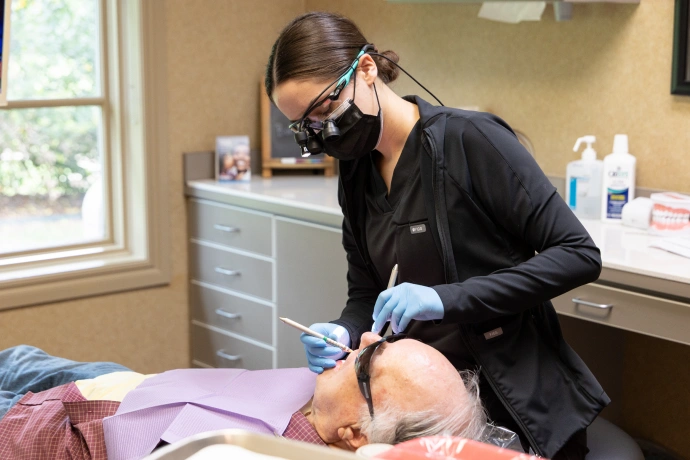
Pain Relief Treatment
Each tooth has three layers: enamel, dentin, and pulp. The pulp contains nerves and blood vessels, protected by the outer layers. However, deep cavities, cracks, or trauma can let bacteria infect the pulp.
An infected tooth can cause severe pain that worsens without treatment. While extraction is sometimes necessary, it can lead to bone loss and shifting teeth.
Root canal therapy effectively removes infection, saves your natural tooth, and restores function. It’s typically less painful and allows for quicker recovery than extraction.
Signs for Root Canal Treatment
Be mindful of these signs that may indicate a tooth infection or abscess:
- I’m experiencing a severe toothache.
- My jaw feels sore or inflamed.
- My tooth sensitivity is intense.
- I’ve noticed a small bump on my gums that looks like a pimple.
- My gums look red, swollen, or puffy.
- There’s an unpleasant taste or odor in my mouth.
If you notice any of these symptoms and suspect a tooth infection, please contact our dental office in Bartlesville right away. Prompt treatment of an infected root canal is essential for your comfort as well as your overall health and well-being.
What happens during a Root Canal?
Many patients feel anxious about root canals, but there’s no need to worry—this procedure is far less intimidating than you might think. Our dentist uses advanced 3-D cone-beam (CBCT) imaging to carefully plan your treatment, offering a detailed, three-dimensional view of your tooth.
This technology enables precise assessment of your tooth’s structure, allowing us to customize the procedure to your unique needs. With the help of anesthesia and state-of-the-art equipment, patient comfort is greatly enhanced, and most patients experience significant relief immediately after the treatment.
We promise to ensure your comfort
If dental anxiety is a concern, we offer the perfect solution to help you relax. Our oral sedation keeps you calm throughout your procedure, while additional comforts like neck pillows, blankets, and TVs in our treatment rooms make your visit even more pleasant.
Before beginning, our dentist will administer a powerful local anesthetic to numb the tooth, ensuring a completely pain-free experience. If you arrived in pain, you’ll feel immediate relief as soon as the anesthetic takes effect.