2320 Nowata Pl, Bartlesville, OK 74006

Why You Can’t Just Replace All Your Teeth With Implants
Request Appointment

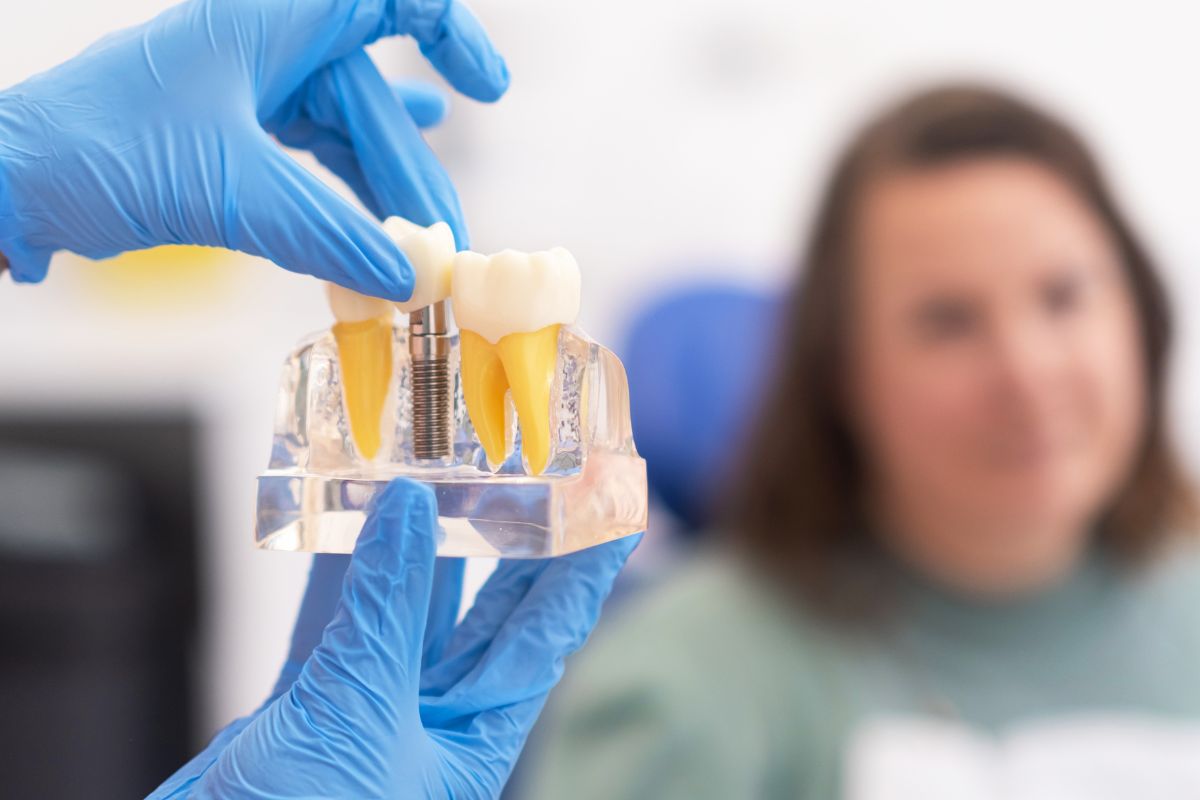
If you’ve ever wondered: “Why can’t I just replace all my teeth with implants?”
It sounds logical. If one missing tooth can be fixed with an implant, why not replace every tooth the same way?
At our dental clinic, our dentists often come across this question. The short answer is: you can, but in most cases, it’s not the smartest, safest, or most practical option. This blog explains why replacing every tooth with its own implant tooth is more complex than it seems, and what realistic full-mouth solutions actually look like—especially if you’re exploring dental implants near me in Bartlesville.
Why Replacing Each Tooth With Its Own Implant Isn’t Always Ideal
Bone Density & Quality Matter
Every implant tooth needs enough healthy jawbone to hold it securely. When teeth have been missing for a long time, the jawbone naturally shrinks—a process called bone resorption.
- More missing teeth = higher bone loss risk
- Weak or thin bone may not support multiple dental implants
- Bone grafting may be required before placement
Bone grafts mean additional surgeries, longer timelines, and higher costs. For someone missing many teeth, this can quickly become overwhelming.
Surgical Risk & Recovery Add Up
A single dental implant is a routine procedure. But replacing every tooth individually could mean 10–28 separate implants.
That increases:
- Risk of infection
- Risk of nerve damage
- Post-surgical discomfort
- Total healing and recovery time
Instead of one recovery period, patients may face months or even years of staged surgeries.
Can all Teeth Be Replaced?
All-on-4 or All-on-X Systems
These systems use 4–6 strategically placed implants to support an entire arch of teeth.
Why they’re popular:
- Fewer implants, less surgery
- Faster recovery
- Lower overall cost
- Strong, natural-looking results
For many patients seeking dental implants for the full mouth, this is the most efficient solution.
Implant-Supported Dentures or Bridges
Instead of replacing every tooth root, a few implants anchor a full bridge or denture.
Benefits include:
- Better stability than traditional dentures
- More affordable than individual implants
- Easier long-term maintenance
These options strike a balance between comfort, function, and cost—especially for patients considering whole-mouth or a full set of dental implants.
Who Can Get All Their Teeth Replaced With Individual Implants?
In some cases, placing an implant for each missing tooth may make sense, such as when:
- Only a few teeth are missing
- Jawbone density is excellent
- The patient is medically healthy
- Time and budget are not limiting factors
That’s why implant planning is always case-by-case. No ethical dentist will recommend permanent full mouth dental implants without a thorough exam, imaging, and discussion.
Risks and Long-Term Care You Should Know About
Even the best dental implants require ongoing care.
Potential long-term concerns include:
- Peri-implantitis (implant-related gum disease)
- Bone loss around implants
- Daily hygiene challenges
- Professional cleanings and monitoring
A full set of teeth implant solution isn’t “set it and forget it.” Long-term success depends on oral hygiene, regular dental visits, and lifestyle habits.
Can All of My Teeth Be Replaced With Dental Implants?
Yes, it is possible to replace all your teeth with implants. But for most people, placing an implant for every tooth isn’t the healthiest or most practical path.
Smarter options—like All-on-X systems or implant-supported bridges—often deliver the same function and aesthetics with less surgery, lower risk, and better long-term outcomes.
If you’re exploring full mouth dental implants or wondering what solution fits your needs, the best next step is a personalized consultation. At Bartlesville Dental Studio, we focus on realistic, evidence-based treatment plans that protect your health, your comfort, and your investment—now and for the long run.
FAQs
Q. Is it bad to replace all my teeth with implants?
A: Usually, the answer is no—but in certain cases, removing problem teeth and replacing them with long-lasting dental implants can be the best option for a healthy, confident smile.
Q. Can you replace all your teeth with individual implants?
A: While individual implants can replace all teeth, it’s often not recommended due to the need for strong bone, multiple surgeries, long healing times, and higher costs.
Q. Can you get all teeth replaced with implants?
A: Four to six implants can replace an entire arch in one day—often called Teeth in a Day, Full Mouth Dental Implants, or All-on-4.
Q. What is the cheapest way to replace all your teeth?
A: Traditional full dentures are usually the most affordable option, with lower-cost alternatives including dental schools, community clinics, or basic implant materials.